Medically Reviewed by Dr. Jay Laudenbach, DMD on July 28, 2026
Gum tissue grafting is a periodontal procedure that replaces gum tissue lost to recession, covering exposed tooth roots, reducing sensitivity, and restoring a more even gumline. If your gums have pulled back from your teeth, your teeth feel more sensitive to hot or cold than they used to, or your smile looks longer or more “toothy,” gum grafting is one of the most reliable ways to protect the tooth root and stop the recession from progressing further.
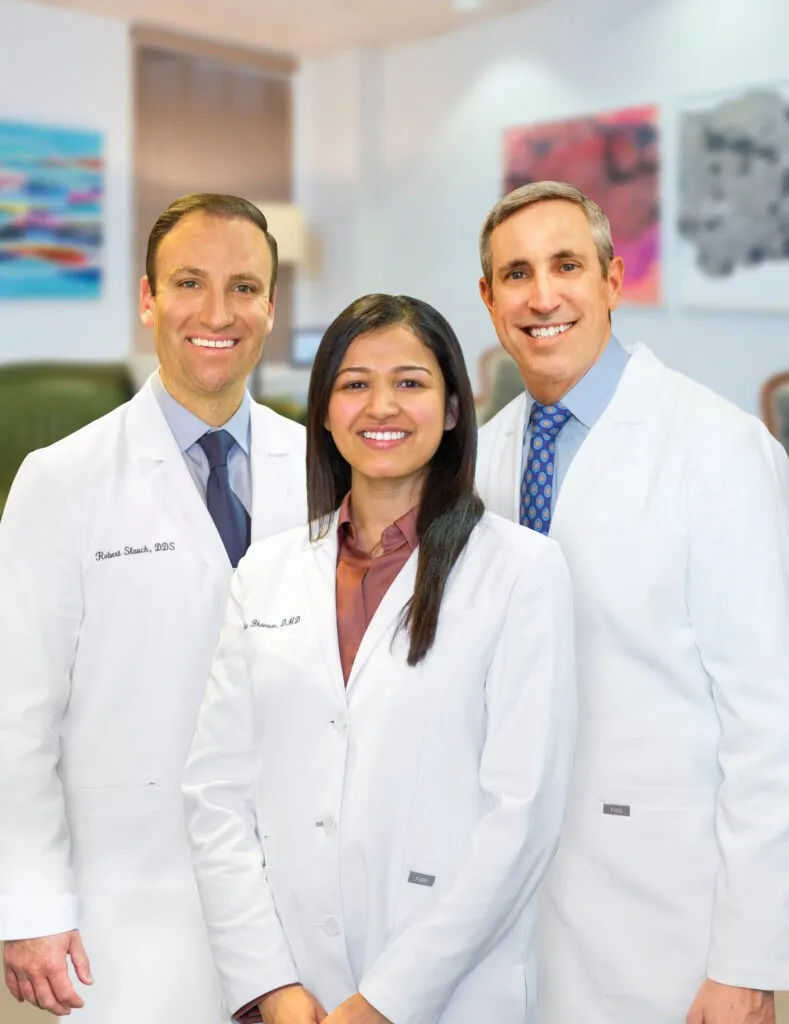
At Laudenbach Periodontics & Dental Implants, Dr. Jay Laudenbach and Dr. Ishita Bhavsar have performed hundreds of gum grafting procedures for patients throughout the Philadelphia area, and our team brings more than 20 years of combined experience in advanced periodontal care. Dr. Laudenbach is a board-certified diplomate of the American Board of Periodontology and a graduate of the Penn Periodontics program, and Dr. Bhavsar is a graduate of the University of Kentucky periodontics program and is board eligible for the American Board of Periodontology. Together, they build a treatment plan around the pattern and severity of your recession rather than a one-size-fits-all approach.
What Is Gum Tissue Grafting?
Gum tissue grafting is a periodontal surgical procedure that treats gum recession, which occurs when gum tissue pulls away from the teeth and exposes the root surface. Recession can result from periodontal disease, aggressive brushing, genetics, misaligned bite forces, or prior orthodontic movement that placed a tooth outside its normal bone and gum support.
When the root surface is exposed, teeth become more vulnerable to decay, temperature sensitivity, and eventual loosening if the recession continues unaddressed. Common signs that you may be a candidate for gum grafting include teeth that look noticeably longer than they used to, a visible notch or indentation at the gumline, and sharp sensitivity when eating something cold, hot, or sweet. For a closer look at how to recognize these signs in your own mouth, see our overview of who is a candidate for gum tissue grafting.
A gum graft replaces lost tissue to protect the tooth root, reduce sensitivity, and restore the appearance of the gumline. Because recession does not reverse on its own, most periodontists recommend addressing it once root exposure or sensitivity becomes noticeable rather than waiting for the condition to progress.
Types of Gum Grafts
Not all gum grafts are the same, and our team evaluates the severity and pattern of your recession to recommend the most appropriate technique for your situation. The four approaches below cover most of the recession patterns we see in practice.
- Connective tissue graft: Tissue harvested from beneath the surface of the palate is placed over the exposed root, producing predictable, natural-looking coverage for most recession patterns.
- Free gingival graft: A thin layer of tissue taken directly from the palate surface adds firm, protective (keratinized) tissue where additional gum thickness is needed.
- Pedicle (lateral) graft: Gum tissue next to the recession site is repositioned to cover the area, avoiding a palate incision when nearby tissue is available.
- Allograft (donated tissue): Processed donor tissue skips the palate incision entirely and can reduce recovery discomfort while achieving comparable root coverage.
Your periodontist discusses which approach fits your anatomy, the number of teeth involved, and your treatment goals before recommending a technique.
What to Expect Before, During, and After Your Procedure
We understand that gum grafting can feel intimidating, and we take every step to make the process comfortable and clearly explained before we begin.
Before Your Procedure
We complete a thorough consultation that includes measuring gum pocket depths and evaluating how far recession has progressed, which helps us build a treatment plan specific to your needs. Local anesthesia numbs both the recipient site and the donor site if palatal tissue is used, and sedation options are available for patients who prefer additional comfort.
During the Procedure
We prepare the recession site with a small incision that creates a pocket for the graft tissue, and the exposed root surface is cleaned thoroughly. If your own tissue is used, we harvest the appropriate amount of connective or gingival tissue from the palate while leaving the outer palatal tissue intact; if donated tissue is used, this step is skipped entirely. The graft is then positioned over the exposed root and secured with sutures, creating a new foundation for tissue coverage and root protection. A single-site graft typically takes about an hour to complete, while treating several sites in one visit takes longer.
After Your Procedure
We provide clear, easy-to-follow care instructions to support proper healing. Most patients resume normal activity within a few days, with soft food restrictions typically lasting one to two weeks while the graft integrates with the surrounding tissue.
Recovery Timeline and Results
Gum grafting recovery is manageable for most patients, and healing follows a fairly predictable timeline. Mild swelling and tenderness at both the graft site and the palate, if applicable, are normal in the first few days, and cold compresses along with any prescribed medications help keep discomfort to a minimum.
During the first week, avoiding hard, crunchy, or spicy foods protects the graft while it integrates with the surrounding tissue, and a soft diet is generally recommended during this stage. Full healing of the grafted tissue generally occurs over several weeks, though most patients are back to their normal routine well before that point.
The results are lasting. A successful gum graft reduces root sensitivity, lowers the risk of decay on the exposed root surface, helps stabilize teeth by restoring the tissue that supports them, and creates a more even, balanced appearance to the gumline. These outcomes are supported by ongoing periodontal maintenance to keep the surrounding tissue healthy over the long term.
Benefits and Potential Risks of Gum Tissue Grafting
Gum grafting offers several benefits beyond covering an exposed root. It can reduce day-to-day sensitivity to hot and cold, lower the likelihood of root decay, help stabilize a tooth by restoring supporting tissue, and improve the balance and symmetry of the gumline. For patients who may consider dental implants down the line, protecting gum tissue around natural teeth now can also support the long-term success of future implant treatment.
As with any surgical procedure, gum grafting carries some risk. Mild bleeding, swelling, and discomfort in the days following surgery are common and expected. Less commonly, a graft may not fully integrate with the surrounding tissue, in which case a follow-up procedure may be recommended. Contact our office promptly if you notice increasing pain, persistent bleeding, or signs of infection such as fever or pus in the days after your procedure, rather than waiting for your next scheduled visit.
Gum grafting is not the only path to managing recession. Depending on severity, some patients are candidates for less invasive approaches first. Our overview of gum recession treatment options walks through the alternatives and how we decide which approach fits a given case.
What Factors Affect the Cost of Gum Tissue Grafting?
The cost of gum tissue grafting depends on several variables specific to your case, and there is no single fee that applies to every patient. The technique used makes a meaningful difference, since a connective tissue graft that requires harvesting your own palatal tissue typically involves more surgical time than a smaller free gingival graft or a pedicle graft that repositions nearby tissue. Using donor tissue through an allograft can also change the overall cost, since it eliminates a second surgical site but adds the expense of the processed graft material itself.
The number of teeth involved is another major factor. Treating a single tooth with mild recession is generally less involved than addressing multiple adjacent teeth or a full quadrant of recession, and your periodontist factors this into the treatment plan during your consultation. Dental insurance coverage also varies significantly by plan, and some policies cover a portion of gum grafting when it is documented as medically necessary rather than cosmetic. Because so much depends on your specific situation, the most accurate way to understand your cost is a consultation that includes a full evaluation of your recession pattern and a clear breakdown of your options.
Why Periodontal Training Matters for Gum Grafting Success
Gum grafting is typically performed by a periodontist, a dentist who has completed additional post-graduate training focused specifically on the gums and supporting bone structure. According to Cleveland Clinic, periodontists complete three additional years of focused training beyond dental school, and gum grafting is one of the most commonly performed periodontal procedures in the United States.
That additional training matters because gum grafting outcomes depend heavily on accurately reading the pattern of recession, selecting the right graft technique, and handling delicate tissue with precision. The same clinical judgment that supports predictable gum grafting results is often relevant to related procedures, which is one reason choosing a surgically trained periodontist matters for procedures like dental implant placement as well.
How to Protect Your Results After Gum Grafting
A successful graft can last for years, but the results depend partly on habits you maintain after healing is complete. Gentle, consistent oral hygiene matters more after grafting, not less, since the grafted tissue is still adjusting to its new location. A soft-bristled toothbrush and a light touch around the treated area help prevent the kind of aggressive brushing that contributed to recession in many patients in the first place.
Routine periodontal maintenance visits also play a role in protecting your investment, since these appointments let your periodontist monitor the graft site, track pocket depths, and catch any early signs of new recession before they become a larger problem. If a misaligned bite or grinding habit contributed to your original recession, addressing that underlying cause is just as important as the graft itself. For a closer look at what the healing period feels like day by day, our guide to periodontal surgery recovery walks through common questions patients have during the first few weeks.
Schedule Your Gum Grafting Consultation at Laudenbach Periodontics
Receding gums do not improve on their own, but they are highly treatable when addressed early. At Laudenbach Periodontics & Dental Implants, our team brings the clinical precision and patient-focused communication that periodontal procedures like gum grafting require, and we walk you through every option so you understand why a particular technique is being recommended for your case.
We invite you to take advantage of our comprehensive $199 consultation, which includes all necessary X-rays, full periodontal charting, and a complete series of photos at no additional charge. For more on our approach and the full range of periodontal therapy options we offer, or contact our Philadelphia office to schedule your evaluation and take the first step toward restoring your gum health.
Frequently Asked Questions About Gum Tissue Grafting
How long does it take to recover from gum tissue grafting?
Most patients feel back to normal within a week to two weeks, though the graft continues to mature and fully integrate with the surrounding tissue over several additional weeks. Swelling and tenderness are typically most noticeable in the first few days and improve steadily after that. Your periodontist gives you a recovery timeline specific to the technique used and the number of sites treated.
Is gum tissue grafting painful?
Local anesthesia numbs the treatment area during the procedure itself, so most patients do not feel pain while the graft is placed. Mild soreness, swelling, or tenderness in the days afterward is common and is usually managed with over the counter or prescribed medication. Discomfort typically peaks in the first couple of days and steadily improves from there.
What are the signs that I might need a gum graft?
Common signs include teeth that appear longer than they used to, a visible notch at the gumline, increased sensitivity to hot, cold, or sweet foods, and a gumline that looks uneven from tooth to tooth. Recession can also be identified during a routine periodontal exam even before it becomes noticeable to you.
How successful is gum tissue grafting over the long term?
When performed by an experienced periodontist, gum grafting is considered a reliable, well-established procedure for covering exposed roots and stabilizing gum tissue. Long-term success depends on consistent oral hygiene and ongoing periodontal maintenance after the graft has healed, since the surrounding tissue still needs regular care to stay healthy.
Will dental insurance cover gum tissue grafting?
Coverage varies by plan and by whether the procedure is considered medically necessary versus cosmetic. Many dental insurance plans provide at least partial coverage for gum grafting related to recession and root exposure. Our team can help you understand your specific coverage and available payment options before your procedure is scheduled.
How much does gum tissue grafting cost?
Gum tissue grafting cost varies based on the technique used, the number of teeth or sites being treated, and whether donor tissue or your own tissue is used for the graft. Dental insurance may cover part of the cost when grafting is documented as medically necessary rather than purely cosmetic. Because pricing depends so much on your specific case, the most reliable way to get an accurate estimate is a consultation where your periodontist evaluates your recession and outlines your options.
About the Author
Founding Periodontist | Board-Certified Diplomate, American Board of Periodontology
Dr. Laudenbach is a graduate of the Penn Periodontics program and has performed hundreds of gum grafting and periodontal procedures for patients throughout the Philadelphia area. He leads Laudenbach Periodontics & Dental Implants alongside Dr. Ishita Bhavsar, focusing on personalized, evidence-based periodontal care.