Veneers and Composite Bonding Philadelphia
When the issue with your smile isn’t missing teeth but rather how your existing teeth look — their color, shape, length, or texture — veneers and composite bonding are two of the most effective tools available. Both can transform a smile dramatically, and both are part of what we offer at Laudenbach Periodontics & Dental Implants through our board-certified prosthodontist, Dr. Robert Slauch, DDS, MDSc, FACP.
What makes our approach different is the foundation we bring to cosmetic work. Veneers and bonding look best — and last longest — when the gum tissue framing them is healthy and properly contoured. Dr. Slauch plans every cosmetic case in close coordination with our periodontal team, so your final result reflects both excellent craftsmanship and a stable gum and bone foundation. Learn more about our broader smile makeover approach or meet Dr. Slauch to understand the specialty behind this work.
Porcelain Veneers vs. Composite Bonding: Which Is Right for You?
These two treatments address similar goals but differ in material, longevity, investment, and the amount of tooth preparation required. Understanding the difference helps you have a more productive conversation at your consultation — and helps Dr. Slauch recommend the option that genuinely fits your situation.
| Porcelain Veneers | No-Prep Veneers | Composite Bonding | |
|---|---|---|---|
| Material | Porcelain (lab-made) | Ultra-thin porcelain (lab-made) | Composite resin (chair-side) |
| Tooth Prep Required | Yes — minimal enamel removal | Minimal or none | None to minimal |
| Visits | 2–3 appointments | 2–3 appointments | 1 appointment |
| Durability | 10–15+ years | 10–15+ years | 5–10 years |
| Best For | Significant color, shape, or alignment changes across multiple teeth | Patients who want veneers but prefer minimal prep | Single teeth, minor chips, gaps, or staining |
| Coverage | Typically out-of-pocket | Typically out-of-pocket | May be partially covered if restorative |
Neither option is universally better — the right choice depends on the extent of the changes you want to make, your tooth structure, and your goals over time. Dr. Slauch will walk through the tradeoffs with you at your consultation and help you make the decision that fits your situation, not just what is most common.

Implant Financing Available
Restore your smile with dental implants and flexible financing options that make treatment affordable and accessible.

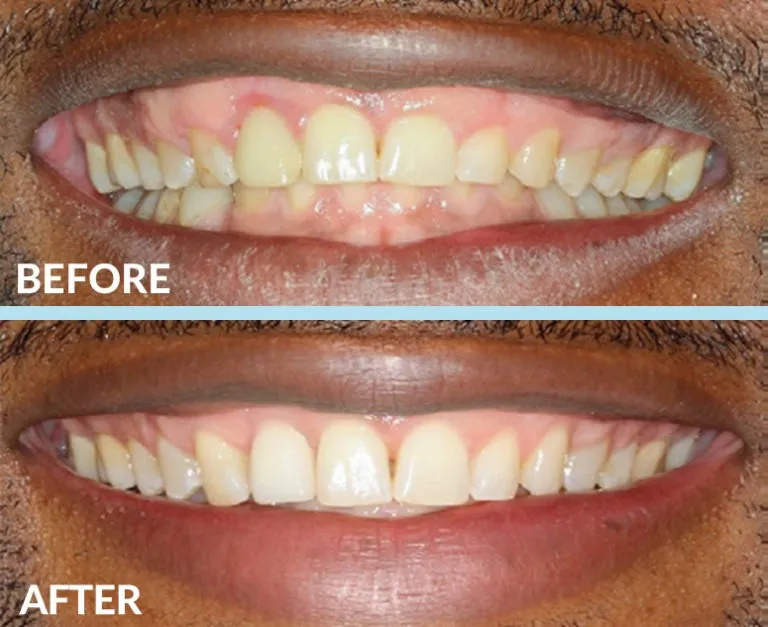
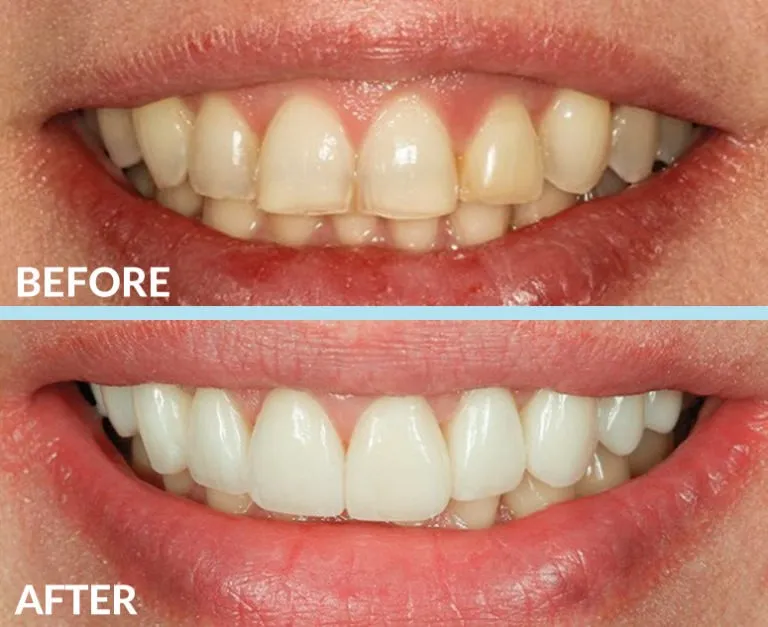
What Veneers and Bonding Can Address
Who Is a Good Candidate?
Both porcelain veneers and composite bonding are well-suited for a range of cosmetic concerns that affect the front-facing surfaces of teeth. The most common reasons patients consider one or both include:
- Tooth discoloration — staining that does not respond to professional whitening, including intrinsic staining from medications, fluorosis, or aging
- Chips and minor fractures — small breaks in enamel that affect appearance without compromising the tooth’s structural integrity
- Gaps between teeth — spaces that bonding or veneers can close without orthodontic treatment
- Uneven length or shape — teeth that appear too short, too narrow, or asymmetrical relative to neighboring teeth
- Worn enamel — surface wear that has changed the look of the teeth over time
- Minor misalignment — slight crowding or rotation where the patient prefers a cosmetic solution over orthodontic treatment
Neither veneers nor bonding is appropriate when there is significant structural damage, active gum disease, or insufficient healthy tooth structure to support the restoration. According to the American Dental Association, a stable, healthy foundation is the prerequisite for any cosmetic restoration — which is precisely the baseline our periodontal team confirms before Dr. Slauch proceeds with treatment planning.

“I had some gum recession, and my regular dentist recommended Dr. Laudenbach as the best periodontist around.Dr. Laudenbach is a very skilled and talented professional. He made sure I was comfortable during the procedure and addressed all of my concerns. I’m very happy with the result.”- Joan, Gum Grafting
The Role of Gum Health in Veneer and Bonding Outcomes
This is where Laudenbach Periodontics is genuinely different from a cosmetic dentistry practice that offers veneers or bonding without a periodontist on the team. The gum line is the frame around every veneer — and if that frame is uneven, inflamed, or receding, the final cosmetic result reflects it regardless of how precisely the restoration was crafted.
Before Dr. Slauch places any veneer or bonding, our periodontal team confirms that your gum tissue is healthy and properly contoured. In some cases, a brief crown lengthening procedure adjusts the gum line so the veneer margins land in the right position. In others, gum grafting addresses recession that would otherwise leave the edge of a veneer exposed over time. This level of planning is standard at our practice — not an add-on you have to ask about.
Why a Prosthodontist and Periodontist Together Matters for Cosmetic Work
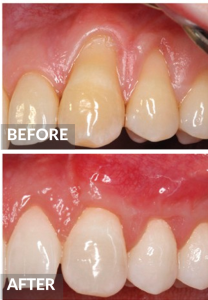
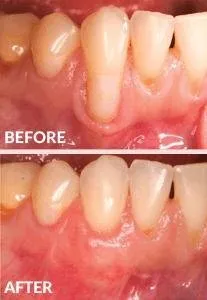
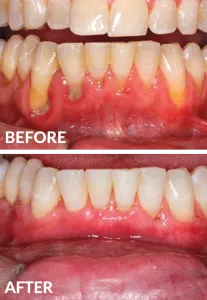
Most practices that offer veneers do so without a periodontist in the building. That works for straightforward cases. But when a patient has any gum recession, an uneven gum line, or periodontal history, the cosmetic result and its longevity are directly affected by tissue health and contour — and a general dentist or cosmetic dentist does not have the training to address those factors.
Dr. Robert Slauch is a Fellow of the American College of Prosthodontists and a board-certified specialist in prosthodontics — the dental specialty dedicated to restoring and replacing teeth. He works alongside Dr. Jay Laudenbach and Dr. Ishita Bhavsar, both board-certified periodontists, so cosmetic and periodontal planning happens in the same conversation, not across two separate offices. This structure means your veneers are designed with your actual gum architecture in mind, not around it as an afterthought. Read more about our full mouth rehabilitation approach if you are considering a more comprehensive treatment plan.
Why Choose Laudenbach Periodontics for Gum Depigmentation?
Gum depigmentation is a procedure where the skill and precision of the clinician matters as much as the technology used. At Laudenbach Periodontics, this procedure is performed by board-certified periodontists with decades of combined experience in Philadelphia — not general dentists or cosmetic practices offering it as an add-on service.
Our practice brings together the focused capabilities of a periodontal specialty practice with the cosmetic and restorative scope of our prosthodontist, Dr. Robert Slauch, DDS, MDSc, FACP. Whether you are interested in gum depigmentation alone or as part of a broader smile enhancement, our team can evaluate your goals and build a plan that addresses them comprehensively. All three of our providers were recognized in Philadelphia Magazine’s Top Dentists 2026, and the practice has been a trusted name in Center City Philadelphia for over 40 years.
Veneers and Composite Bonding FAQs
What is the difference between porcelain veneers and composite bonding?
Porcelain veneers are lab-fabricated, thin shells of ceramic bonded to the front surface of a tooth. They are more durable, more stain-resistant, and better suited to significant cosmetic changes — but require two or three appointments and a higher investment. Composite bonding uses tooth-colored resin applied directly at the chair in a single visit. It is a more affordable option for minor corrections such as small chips, gaps, or isolated staining, but typically requires replacement sooner than porcelain veneers.
Are veneers permanent?
Traditional porcelain veneers require a small amount of enamel removal during preparation, which makes the process irreversible — you will always need veneers on those teeth going forward. No-prep or minimal-prep veneers remove little to no enamel and preserve more of your natural tooth structure. Composite bonding is fully reversible. Dr. Slauch will explain what each option requires at your consultation so you can make an informed decision.
How long do veneers and bonding last?
Porcelain veneers typically last 10 to 15 years or longer with proper care and maintenance. Composite bonding generally lasts 5 to 10 years before it may need to be repaired or replaced due to wear, chipping, or staining. Both options benefit significantly from maintaining good gum health, which our periodontal team monitors as part of your ongoing care.
Does insurance cover veneers or composite bonding?
Veneers are considered a cosmetic procedure and are generally not covered by dental insurance. Composite bonding may be partially covered if it is being used to restore a tooth damaged by trauma — but cosmetic bonding is typically out-of-pocket. Our team can provide a cost estimate and discuss available payment options at your consultation.
Do I need healthy gums before getting veneers?
Yes. Healthy, stable gum tissue is a prerequisite for any veneer or bonding treatment. If you have active gum disease, recession, or an uneven gum line, those issues need to be addressed first. In many cases, minor periodontal treatment or crown lengthening is incorporated into the cosmetic treatment plan rather than treated as a separate prerequisite — which is one of the advantages of having both specialists in-house.
Can veneers fix crooked teeth?
Veneers can improve the appearance of mildly crooked or misaligned teeth by masking the surface, but they do not move teeth. For significant misalignment, orthodontic treatment may be more appropriate, or may be recommended before veneers to achieve the best long-term result. Dr. Slauch will evaluate your specific situation and give you an honest assessment of what is achievable with veneers versus what would benefit from additional treatment.
Schedule Your Cosmetic Consultation in Philadelphia
Dr. Robert Slauch, Dr. Jay Laudenbach, and Dr. Ishita Bhavsar are all recognized in Philadelphia Magazine’s Top Dentists 2026 — an interdisciplinary team that brings prosthodontic and periodontal precision together for every cosmetic case we take on. Whether you are interested in a single bonded tooth or a full-smile veneer case, the same depth of planning and specialist attention applies.
Our $219 smile consultation includes all necessary X-rays, full periodontal charting, and a complete photograph series at no additional charge. It gives you the clinical picture and the roadmap — without pressure and without surprises. Request your appointment online and take the first step toward the smile you have been thinking about.
Transform Your Oral Health with Periodontics in Philadelphia
Experience exceptional periodontal care at Laudenbach Periodontics & Dental Implants in Philadelphia. Take proactive steps to treat gum disease, preserve your teeth’s supporting structures, and maintain a healthy smile.

“All in One” Same
Day Tooth Replacement

Grafting
Our Mission
Our mission is to help patients live healthier lives. We provide a caring, nurturing environment where your comfort and health is of primary importance.
1520 Locust Street, Suite 600
Philadelphia, PA 19102
215-985-4337
Serving The Following Cities:
Philadelphia PA• Ardmore PA• Bala Cynwyd PA• Broomall PA• Bryn Mawr PA
Chester Heights PA• Flourtown PA• Gladwyne PA• Haverford PA• Media PA
Springfield PA• Merion Station PA• Narberth PA• Newtown Square PA• Havertown PA
Villanova PA• Wayne PA• Wynnewood PA• Lafayette Hill PA• Devon PA
Paoli PA• Berwyn PA• Immaculata PA