Medically Reviewed by Jay Laudenbach, DMD on August 4, 2026
Full mouth tooth replacement is generally an option for adults who have lost most or all of their teeth in an arch, whether from decay, gum disease, or injury, and who want a longer-term solution than a single removable appliance. True candidacy depends on a combination of gum health, jawbone density, oral hygiene, lifestyle, and medical history, and the only way to know for certain is through a hands-on evaluation with a specialist.
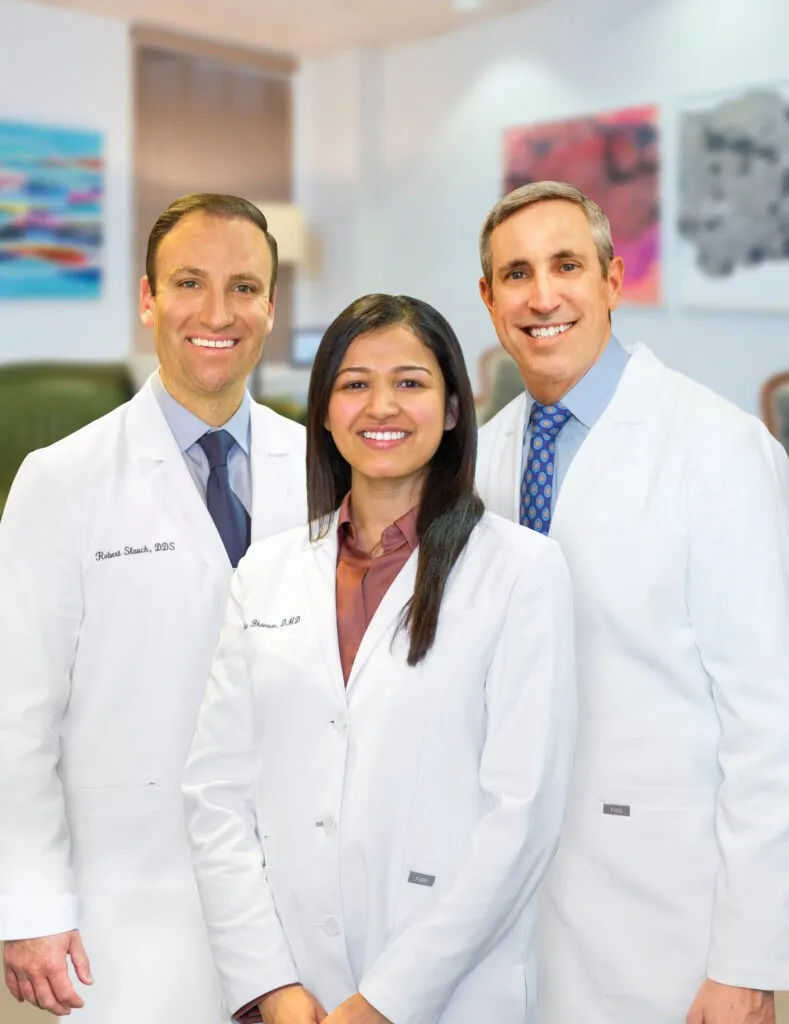
At Laudenbach Periodontics & Dental Implants, our caring team of highly trained dental specialists includes Dr. Jay Laudenbach, Dr. Ishita Bhavsar, and Dr. Robert Slauch, who bring over 20 years of trusted experience in full arch care. As diplomates of the American Academy of Periodontology, we provide personalized, comprehensive evaluations to determine your candidacy for transformative full mouth replacement options, using advanced technology and techniques that give you the high-quality results you deserve.
What Full Mouth Tooth Replacement Involves
Full mouth tooth replacement uses dental implants and supporting restorations, such as crowns, bridges, and dentures, to rebuild an entire arch of missing or failing teeth. Rather than treating each tooth separately, a small number of implants are strategically placed to anchor a fixed or removable prosthesis, restoring your ability to chew, speak, and smile with confidence.
Two of the most common approaches are All-on-X dental implants, which use four to six implants per arch to support a fixed bridge, and implant-supported overdentures, which combine a removable denture with a few implants for added stability. Our page on full arch dental implants walks through how these options compare in more detail.
Signs You May Need Full Mouth Tooth Replacement
You may be a candidate for full mouth tooth replacement if most or all of the teeth in one or both arches are missing, failing, or causing ongoing pain, or if your current dentures have become loose, uncomfortable, or unstable while eating and speaking. Extensive decay, advanced gum disease, or a history of repeated dental work can also be signs that a full arch approach may be a better fit than repairing individual teeth one at a time.
Many patients also notice changes in facial appearance or bite alignment as bone gradually resorbs after tooth loss. If any of these describe your situation, a comprehensive evaluation at our full mouth rehabilitation program can help clarify which options are realistic for your specific case.
5 Factors That Impact Full Mouth Tooth Replacement Candidacy
We understand every patient is different, so when creating a personalized solution to replace your missing teeth, we consider every detail to ensure full mouth tooth replacement is right for you. The following factors play a role in determining your candidacy for this treatment:
Gum Health
The gums help hold the teeth in place, so we closely examine your gum health when considering full mouth tooth replacement. Dental implants are inserted through the gums and into the jawbone, making good gum condition crucial to smooth healing and a faster recovery. If you have uncontrolled gum disease, we can help you treat it, so you can still restore your smile with dental implants.
Jawbone Density
Tooth roots stimulate and strengthen the jawbone, so when teeth fall out, the jawbone may weaken and degrade over time. Because dental implants are inserted into the jawbone, it’s essential to have enough structure to support them. If you don’t have adequate jawbone density for dental implants, bone grafting can add volume, prepare your jaw for the implants, and give you a better chance of a successful result.
Oral Hygiene
Maintaining good oral hygiene, including brushing, flossing, and getting regular cleanings, helps your dental implants last as long as possible and keeps your restoration functioning well over time. Our dedicated professionals provide clear, straightforward care instructions to keep your smile strong and healthy after your full mouth tooth replacement.
Lifestyle and Habits
Smoking and excessive alcohol consumption can increase the risk of gum disease, gum recession, and other oral health issues. A systematic review and meta-analysis published through the National Library of Medicine found that smokers face a substantially higher risk of dental implant failure than non-smokers, along with greater bone loss around the implant site. If you don’t smoke or are willing to quit, you generally have a better chance of implant success and a lower risk of future complications.
Medical Conditions and Medications
Full mouth tooth replacement is a dental procedure, so we consider your health history and medications to identify potential factors that may make the treatment too risky. For example, diabetes, uncontrolled gum disease, autoimmune conditions that affect healing, and certain medications can reduce your chance of implant success. We take the time to find the right treatment based on your unique needs so you can work toward the smile you want.
What to Expect During a Full Mouth Replacement Evaluation
Determining candidacy is not something we guess at. It starts with a comprehensive evaluation designed to give you and your care team a clear picture of your oral health before any treatment plan is recommended. Our full arch implant consultation page walks through what happens at that first appointment in more detail.
Our $199 consultation is designed to give you a comprehensive understanding of your oral health before you commit to any treatment. It generally includes the following:
- X-rays: imaging that shows the condition of your jawbone and remaining teeth
- Full periodontal charting: a detailed assessment of your gum health at every tooth site
- A complete series of photos: documentation used to plan and track your treatment
We also use genuine Straumann components for implant-based restorations, which supports long-lasting, reliable results once a treatment plan is underway. If you would like to move forward, you can reach our team through our contact form to schedule your evaluation.
If You Are Not Yet a Candidate, You Still Have Options
Being told you are not an ideal candidate for implant-based full mouth tooth replacement today does not mean the door is closed. Bone grafting, treatment for active gum disease, or a period of smoking cessation can often change the picture over time, and a staged treatment plan may still get you to a stable, functional result.
In the meantime, options such as implant-supported overdentures or traditional removable dentures can restore function while you prepare for a more permanent solution. Our page on full mouth tooth replacement options compares these paths in more detail, so you can understand what each one involves before deciding how to move forward.
Learn If a Full Mouth Tooth Replacement Is Right for You With the Experienced Team at Laudenbach Periodontics & Dental Implants
Laudenbach Periodontics & Dental Implants has served patients throughout the Philadelphia area for more than 20 years. Our team of diplomates of the American Academy of Periodontology, along with a board-certified prosthodontist, collaborates on every full mouth case, so the plan you receive reflects your bone structure, gum health, and goals rather than a one-size-fits-all recommendation.
Don’t let dental problems continue to affect your daily life and confidence. If you are ready to find out whether full mouth tooth replacement is right for you, our team can walk you through your imaging, your candidacy, and your options in detail. You can request an appointment through our appointment request page to take the first step toward a restored smile.
Frequently Asked Questions About Full Mouth Tooth Replacement Candidacy
What disqualifies a patient from full mouth tooth replacement with dental implants?
Very few conditions rule out full mouth tooth replacement altogether. Uncontrolled gum disease, insufficient jawbone density, uncontrolled diabetes, certain autoimmune conditions, and heavy tobacco use can all complicate implant success, but many of these factors can be managed or treated first. A comprehensive evaluation is the only reliable way to know whether implants, a staged approach, or an alternative restoration best fits your situation.
Can I get full mouth tooth replacement if I have bone loss?
Bone loss does not automatically rule out full mouth tooth replacement. Depending on how much bone remains, bone grafting can add volume and prepare the jaw for implant placement. Many patients who are not initially strong candidates become eligible after this kind of preparatory treatment, which is why an imaging-based evaluation matters more than a quick visual check.
Does smoking affect my candidacy for full mouth tooth replacement?
Smoking can slow healing and increase the risk of implant failure, since it restricts blood flow and reduces the oxygen available to healing tissue. It does not automatically disqualify you, but quitting or reducing tobacco use before treatment generally improves your odds of a successful, long-lasting result. Your provider can discuss what this means for your specific treatment plan.
What happens during a full mouth tooth replacement evaluation?
A typical evaluation includes X-rays or other imaging, a full periodontal exam, a review of your medical history and medications, and a conversation about your goals and budget. This information allows your care team to recommend a treatment plan suited to your bone structure and gum health, rather than assuming one approach fits every patient.
What if I am not a candidate for dental implants right now?
If implants are not the right fit today, that does not mean your options are limited to living with the problem. Treating gum disease, undergoing bone grafting, or choosing an implant-supported overdenture or traditional denture in the meantime can restore function while you prepare for a more permanent solution down the road.
About the Author
Board-Certified Periodontist
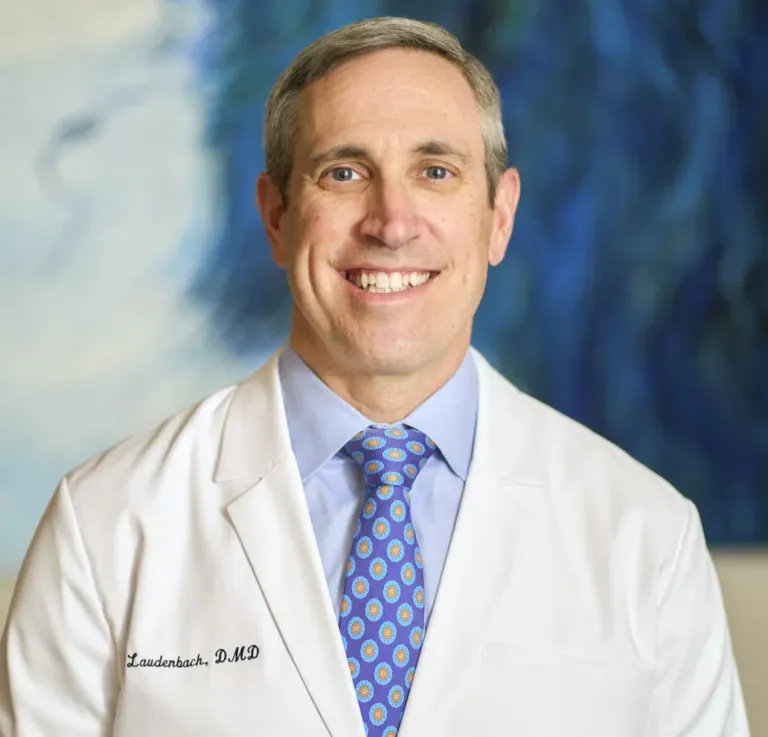
Dr. Jay Laudenbach is a board-certified periodontist and a Diplomate of the American Board of Periodontology, practicing in the Philadelphia area for more than 20 years. He completed a four-year residency in periodontics and periodontal prosthesis at the University of Pennsylvania School of Dental Medicine and has trained extensively in dental implant systems and same-day restorative techniques.