Most people have visited a general dentist, and many have been referred to a periodontist or oral surgeon. But when the word “prosthodontist” comes up, patients often pause. It is one of dentistry’s most advanced specialties, yet one of the least understood by the public. Knowing what a prosthodontist does and when to see one can make a meaningful difference in how you approach your dental care, particularly when your smile involves missing teeth, significant restoration, or a full-mouth transformation.
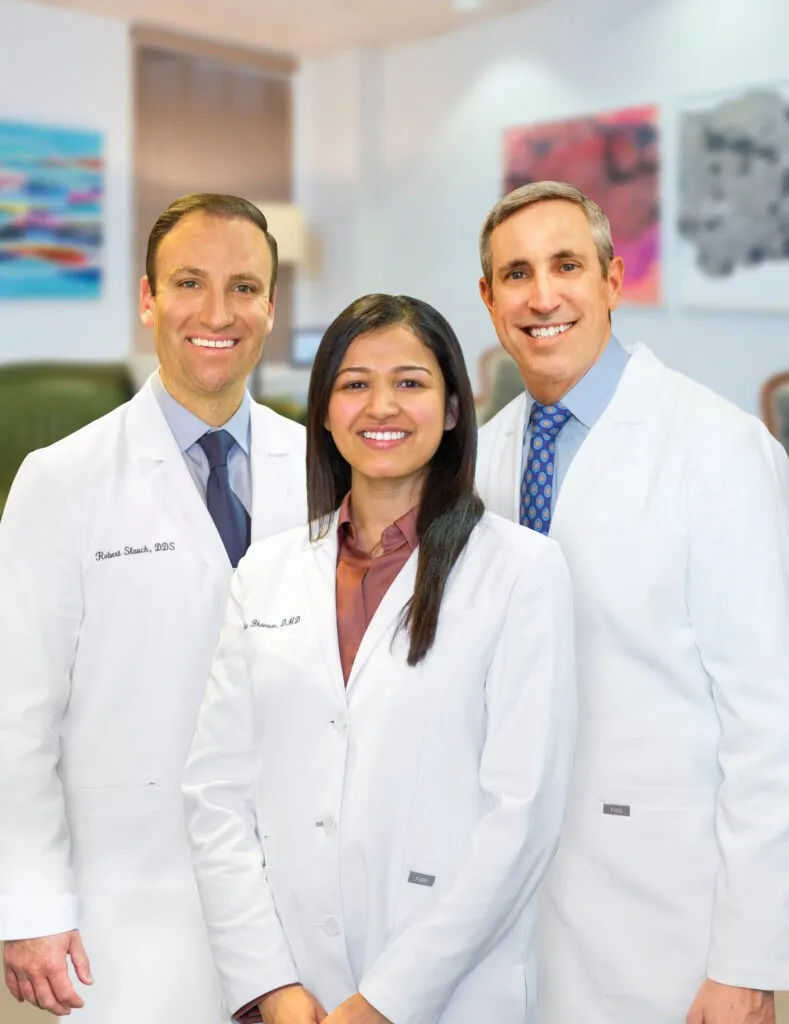
At Laudenbach Periodontics & Dental Implants in Philadelphia, our team includes Dr. Robert Slauch, DDS, MDSc, FACP, a board-certified prosthodontist and Fellow of the American College of Prosthodontists (ACP). Dr. Slauch brings surgical and prosthetic training from Penn’s renowned Periodontal Prosthesis program and works as part of our interdisciplinary care model alongside our periodontists. For patients facing the most involved restorative cases, having access to this level of training under one roof is a distinct advantage. To understand why, it helps to start with the fundamentals of our dental implant services and what makes prosthodontics a field apart.
More Than a General Dentist
Dentistry is broad. A general dentist is trained to handle a wide range of everyday needs, from checkups and cleanings to fillings and basic crowns. That foundation is valuable and essential for routine care. What a general dentist is not specifically trained for, however, is the full scope of restorative work that addresses severely damaged, failing, or missing teeth at a comprehensive level.
The Extra Years That Set Prosthodontists Apart
A prosthodontist begins the same way every dentist does: four years of dental school. After that, prosthodontists complete an additional three-year residency accredited by the Commission on Dental Accreditation, focused on the restoration of teeth, dental implants, and areas of missing teeth. According to the American Dental Association, this residency is built around developing a working knowledge of restorative materials, clinical research, and the combination of art and science required to create optimal outcomes for patients. That is three additional years spent specifically on restoring and replacing teeth, not general dentistry.
This depth of training means prosthodontists are equipped to take on cases that fall outside the scope of what most general dentists handle regularly. Complex bite problems, full-mouth reconstruction, and cases involving multiple missing teeth all fall squarely within the prosthodontist’s scope.
What a Prosthodontist Actually Does
A prosthodontist focuses on restoring what is missing and rebuilding what remains. Their training covers a wide range of restorative procedures, and they are particularly well-suited to lead treatment planning in cases involving multiple procedures or when the outcome needs to be both functional and aesthetic.
The Procedures Prosthodontists Handle
When a patient’s case involves significant tooth loss, worn dentition, or a desire for comprehensive smile improvement, a prosthodontist brings a precise, whole-mouth perspective. The following procedures are core to the prosthodontic scope of care:
- Full arch implant restoration, including All-on-X dental implants
- Crowns, bridges, and veneers in complex or multi-tooth cases
- Dentures and implant-supported overdentures
- Full mouth rehabilitation following trauma, disease, or severe wear
- Smile design and aesthetic reconstruction
Each of these treatments requires not only technical skill but also an understanding of how the teeth, jaw, and bite function together. A prosthodontist is trained to consider all of these variables as part of a single, coordinated plan.
The Difference in Approach
A general dentist treats one tooth. A prosthodontist treats the entire mouth as a system. This distinction matters most in cases involving full arch dental implants, where the placement of implants and the design of the prosthetic teeth must account for bite forces, jaw alignment, aesthetics, and long-term stability. The level of planning and coordination required in these cases is significant, and a prosthodontist’s training is built around exactly this type of work.
Prosthodontists and Interdisciplinary Care
One of the hallmarks of high-quality prosthodontic care is how well prosthodontists work alongside other dental specialists. Prosthodontists collaborate with periodontists, oral surgeons, orthodontists, and other providers to create comprehensive treatment plans for patients whose needs require more than one specialty.
Why Collaborative Care Matters
For patients with significant bone loss, gum disease, or other periodontal concerns, the restorative phase cannot happen in isolation. A periodontist must first ensure the foundation, the gum and bone tissue, is healthy enough to support long-term restoration. The prosthodontist then builds on that foundation. This is precisely how care is coordinated at our practice. Our team works together to address both the surgical and prosthetic sides of complex cases, which means patients receive cohesive, connected care rather than fragmented treatment from providers who are not communicating with one another.
Prosthodontics and Dental Implants
Dental implants are one of the areas where prosthodontic training is most directly applied. While placing the implant itself is a surgical step, the prosthetic phase, designing and delivering the final restoration, draws heavily on prosthodontic knowledge. Understanding how the crown, bridge, or full-arch prosthetic fits, functions, and holds up over time is a skill set developed during the prosthodontic residency.
In full arch cases specifically, the prosthetic design is as important as the surgical execution. How the teeth are shaped, how the bite is balanced, and how the final result looks and functions all fall within the prosthodontist’s domain. Dr. Slauch’s surgical and prosthetic training means he can approach these cases with an understanding of both dimensions, which is a significant advantage for patients pursuing a complete transformation.
Contact Laudenbach Periodontics & Dental Implants
Laudenbach Periodontics & Dental Implants has served the Philadelphia area for over 45 years, bringing together a team of board-certified specialists committed to the highest standard of care. Dr. Robert Slauch, DDS, MDSc, FACP, holds prosthodontic board certification through the ACP and a surgical and prosthetic background that positions our practice to take on cases requiring the most precision and planning.
Whether you are researching full arch restoration, considering a complete smile makeover, or were simply referred to a prosthodontist and want to understand what that means, we are here to walk you through every step. Reach out through our contact form to schedule a comprehensive consultation and find out what prosthodontic care can do for your smile.