Medically Reviewed by Jay Laudenbach, DMD on July 27, 2026
Same-day dental implants let you walk into the office with a missing, failing, or freshly extracted tooth and walk out the same day with a secure, functional replacement tooth in place. Instead of waiting three to six months between implant placement and the final crown, the implant and a temporary restoration are placed in one visit, compressing what is normally a multi-appointment process into a single day of care.
At Laudenbach Periodontics & Dental Implants, our approach to dental implants combines advanced digital imaging, precise surgical planning, and same-day restorations to help qualifying patients leave their appointment with a new tooth already in place. The guide below walks through what actually happens during a same-day implant appointment, hour by hour, so you know what to expect before you sit in the chair.
Who Is a Good Candidate for Same-Day Dental Implants?
Not every patient is a candidate for immediate treatment through our same-day tooth replacement service. Same-day, or immediate load, treatment depends on the condition of the bone and gum tissue at the implant site, along with your overall health. Your periodontist evaluates several factors during your consultation before recommending this approach over a more traditional, staged treatment plan.
Generally, you may be a good candidate for same-day dental implants if you have:
- Bone density and volume: enough healthy bone at the implant site to support the implant right away
- Gum health: healthy tissue with no active infection near the area being treated
- Bite stability: a stable bite pattern that avoids placing excessive early force on the temporary restoration
- Overall health: no uncontrolled medical conditions that would slow bone healing and integration
If your bone or gum tissue needs to be strengthened first, that does not rule out dental implants altogether. It usually means a staged approach, sometimes involving bone grafting, can give your implant a strong foundation. For patients who are not candidates for immediate placement, replacing missing teeth is still very achievable with a slightly longer timeline.
Hour 1 to 2: Comprehensive Assessment and Digital Treatment Planning
Your same-day appointment starts with a thorough clinical examination and final imaging. Using cone-beam computed tomography (CBCT), your periodontist captures detailed three-dimensional images of your jawbone, nerves, and surrounding structures. This technology creates a virtual model of your mouth, allowing your specialist to plan the exact position, angle, and depth of each implant before any surgery begins.
During this phase, your team also reviews your medical history, discusses sedation options, and confirms the design of your temporary prosthesis. Because your temporary teeth are fabricated ahead of time based on your earlier scans and impressions, they are ready to attach as soon as your implants are placed, which is what allows the entire process to be completed in a single visit.
Hours 3 to 5: Surgical Phase and Implant Placement
Once you are comfortably sedated, the surgical phase begins. If you still have a tooth or teeth that need extraction, your periodontist removes them first, often placing the implant into the same socket to help preserve the surrounding bone. For full-arch cases, the All-on-X procedure typically involves placing four to six implants in strategic positions throughout the jaw, positions chosen to maximize bone contact and distribute chewing forces evenly.
Your specialist angles each implant precisely to avoid vital structures such as nerves and the sinus cavity while achieving strong initial stability. When bone density at a specific site is insufficient, bone grafting may be performed at the same time as implant placement rather than as a separate procedure. Patients who need a more extensive rebuild of the jaw before implants are placed are often better served by full arch dental implants planned over a longer timeline.
Hours 6 to 9: Abutment Placement, Temporary Restoration, and Quality Control
After your implants are secured in the jawbone, small connector pieces called abutments are attached to each one, forming the foundation for your temporary teeth. Your dental team retrieves the pre-fabricated temporary prosthesis and carefully adjusts it to fit over your new implants, checking your bite and making any modifications needed so that no single tooth bears excessive force when you close your mouth.
With your temporary teeth attached, your periodontist performs a full evaluation of the restoration, checking implant stability, confirming that your bite feels natural, and adjusting the height or contour of individual teeth to improve both function and appearance. Your team also examines the gum tissue around each implant to confirm that healing has begun as expected, then documents the results with photographs and provides detailed home care instructions before you leave the office.
Hours 10 to 24: Recovery During Your First Day at Home
The remainder of your first day focuses on recovery and adjustment. Some swelling and discomfort are normal after any surgical procedure, and your specialist prescribes appropriate medication to manage discomfort and reduce the risk of infection. You will also receive specific dietary guidance, typically starting with soft foods and gradually reintroducing more variety as healing progresses over the following weeks.
During these first hours, you also begin learning how to care for your new teeth. Hygiene around an implant differs slightly from caring for a natural tooth, so your team walks you through cleaning techniques specific to your restoration. Before you leave, you will schedule follow-up appointments to monitor healing and plan for your permanent prosthesis, which replaces the temporary teeth once your implants have fully integrated with the surrounding bone.
Same-Day Implants Compared to Traditional Implant Placement
Traditional implant placement spreads treatment across two main stages: the implant is placed first, and after three to six months of healing, a permanent crown, bridge, or denture is attached once integration is confirmed. Same-day treatment compresses that timeline by placing a temporary restoration immediately, so you are never without a functional tooth while your implant integrates with the bone underneath.
Neither approach is inherently better for every patient. Traditional, staged treatment allows more time to address bone or gum concerns before the final restoration is designed, while same-day treatment prioritizes minimizing the number of appointments and the time spent without teeth. Your periodontist can help you weigh both options against your bone quality, health history, and the cost of dental implants for your specific case before recommending a path forward.
What to Expect Long-Term After Same-Day Implants
Same-day implants are designed to function and look like natural teeth well after the initial 24-hour period. Many patients report improved comfort eating and speaking once healing is complete, along with renewed confidence that had been affected by missing or failing teeth. These outcomes depend on consistent home care and keeping scheduled follow-up visits during the integration period.
After healing is complete, your periodontist replaces the temporary teeth with a permanent prosthesis crafted from durable, natural-looking materials. With regular maintenance and professional checkups, a well-integrated implant can continue to function for many years. Patients interested in the full range of advantages this approach offers can review the additional benefits of same-day treatment before their consultation.
The Research Behind Immediate Implant Placement
Same-day, or immediately loaded, implant treatment has been studied extensively as digital planning and implant technology have improved. A 2025 systematic review published through the National Library of Medicine examined immediately loaded implant-supported restorations in the posterior jaw and found survival rates ranging from 86 to 100 percent across the studies reviewed, with outcomes comparable to traditional, delayed loading protocols when patients were carefully selected.
That research lines up with what periodontists see clinically: candidate selection and precise surgical planning matter more to long-term success than the treatment timeline itself. A well-planned same-day case, placed in a patient with adequate bone and stable gum health, can achieve results that hold up as well as a staged case over time.
Choose Laudenbach Periodontics and Dental Implants for Your Same-Day Smile
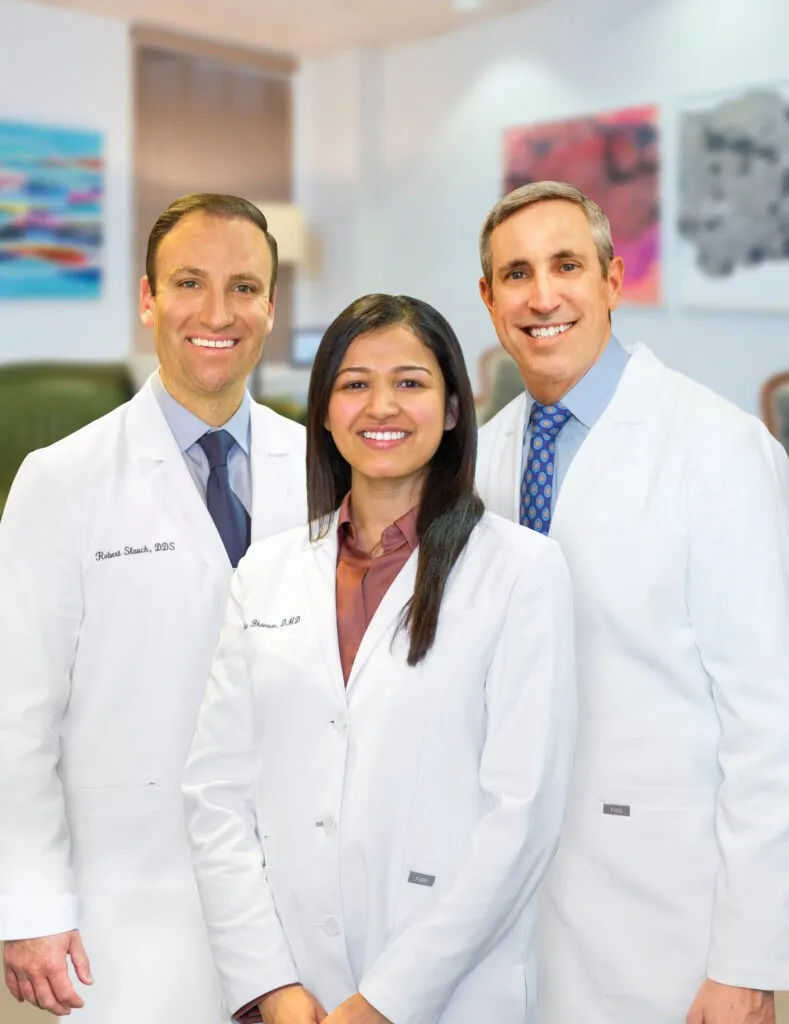
Laudenbach Periodontics & Dental Implants has provided periodontal and dental implant care in the Philadelphia area for more than 20 years. Our clinical team includes a board-certified periodontist and prosthodontists who work together on full-arch and single-tooth implant cases, combining digital planning technology with hands-on surgical experience. We evaluate every same-day case individually, so the plan you receive reflects your bone structure, health history, and goals rather than a one-size-fits-all protocol.
If you are ready to find out whether same-day dental implants are a good fit for you, our team can walk you through your imaging, your candidacy, and your options in detail. Contact our office to schedule a consultation and take the first step toward a fully restored smile.
Frequently Asked Questions About Same-Day Dental Implants
How Do Same-Day Dental Implants Differ From Traditional Dental Implants?
Traditional dental implants are placed first, then left to integrate with the jawbone for three to six months before a permanent crown, bridge, or denture is attached. Same-day dental implants combine those steps into one visit by placing a temporary restoration immediately after the implant, so you leave with a functional tooth the same day. Both approaches use the same implant technology and require a similar healing period before the final, permanent restoration is placed.
Am I a Candidate for Same-Day Dental Implants?
Candidacy depends on the amount and quality of bone at the implant site, the health of your gum tissue, and your overall medical history. Patients with adequate bone density, no active infection, and stable overall health are often good candidates. If your bone needs to be built up first, a staged approach with bone grafting may be recommended instead so your implant has the strongest possible foundation before it takes on chewing forces.
Is the Same-Day Dental Implant Procedure Painful?
The surgical placement itself is performed under sedation, so you should not feel pain during the procedure. Afterward, mild to moderate soreness and swelling are common for the first few days, similar to what you would expect after a tooth extraction. Your periodontist prescribes appropriate medication and dietary guidance to keep you comfortable, and most patients find the discomfort manageable and short-lived compared to the benefit of leaving with a new tooth the same day.
How Long Do the Temporary Teeth Stay in Place Before the Permanent Restoration?
Temporary teeth typically remain in place for three to six months while your implant integrates with the surrounding jawbone, a process called osseointegration. During this period, you will follow a soft food diet and attend follow-up visits so your periodontist can monitor healing. Once integration is confirmed, the temporary restoration is replaced with a custom, permanent crown, bridge, or denture designed to match your natural bite and appearance.
What Happens if I Am Not a Candidate for Same-Day Implants?
If same-day placement is not the right fit, that does not rule out dental implants altogether. Your periodontist may recommend a staged approach that allows time for the bone or gum tissue to heal or be strengthened, sometimes with bone grafting, before the implant is placed. This traditional timeline takes longer but can achieve the same long-term result: a stable, natural-looking replacement tooth.

About the Author
Board-Certified Periodontist
Dr. Jay Laudenbach is a board-certified periodontist and a Diplomate of the American Board of Periodontology, practicing in the Philadelphia area for more than 20 years. He completed a four-year residency in periodontics and periodontal prosthesis at the University of Pennsylvania School of Dental Medicine and has trained extensively in dental implant systems and same-day restorative techniques.