When you schedule a periodontal consultation, you might wonder why the appointment takes a full hour and involves so many measurements. At Laudenbach Periodontics & Dental Implants, those 47 measurements give periodontists a complete picture of your oral health. Each measurement serves a specific purpose in detecting gum disease, assessing bone loss, identifying bite problems, and planning the most effective treatment for your unique situation.
During your first visit, these measurements become the foundation for understanding what’s happening in your mouth right now and what might develop in the future. Think of this data collection as creating a detailed map. Without it, treating periodontal disease would be like trying to navigate a city without street signs. Each data point helps the treatment team understand not just today’s situation, but how your oral health has changed over time.
What Those 47 Measurements Actually Tell Us
The bulk of these measurements comes from periodontal probing. Around each tooth, six separate depth measurements reveal how much the gum tissue has pulled away from the tooth structure. Multiply six measurements by your remaining teeth, and you quickly reach dozens of readings. A CDC study of 2009 and 2010 national survey data estimated that 47.2% of U.S. adults aged 30 and older had periodontitis, making these measurements critical for early detection.
Beyond pocket depths, measurements include bleeding points, gum recession levels, tooth mobility, and attachment loss. Each reading provides context for the others. A 5mm pocket depth means something different when paired with heavy bleeding than it does with healthy tissue. The measurements work together to reveal patterns that individual readings might miss.
Bite measurements and tooth position records round out the data collection. These show how your teeth come together, where forces concentrate, and whether shifting has occurred. For patients considering dental implants, understanding bite forces and bone density becomes essential for long-term success.
The Technology Behind Accurate Measurements
Digital tools have transformed how periodontal practices gather this information. Cone beam 3D imaging captures bone structure in three dimensions, showing exactly where bone loss has occurred and how much healthy tissue remains. Combined with digital radiography and intraoral photography, these technologies create a comprehensive baseline for your care.
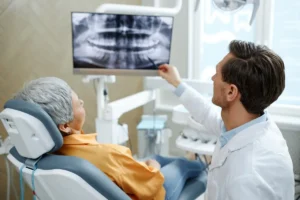
At our Philadelphia and Exton offices, we also use a cordless, handheld X-ray device called the Nomad, which allows your provider to stand beside you while capturing images. Our recently renovated hygiene rooms feature large screens, so you can review your X-rays and images together with your provider. You can read more about the technology we use.
The periodontal probe itself provides measurements down to the millimeter. While the tool appears simple, proper technique requires training to ensure consistent, accurate readings. Pressure matters. Angle matters. These small variables can affect whether disease gets detected early or warning signs get missed until problems advance.
Full-mouth charting takes time because precision matters. Rushed measurements miss subtle changes. The hour-long appointment allows the team to work methodically, double-checking questionable readings and noting characteristics that numbers alone can’t capture.
How Measurements Guide Your Treatment Plan
Once collected, these measurements become your treatment roadmap. Pocket depths between 4 and 6mm typically respond to laser periodontal therapy, while deeper pockets may require surgical intervention. Recession patterns tell periodontists whether gum grafting would benefit you now or if it can wait.
The measurements also help prioritize treatment. Some areas demand immediate attention to prevent tooth loss, while others remain stable enough to address later. Without comprehensive data, the approach would either overtreat stable areas or risk undertreating active disease. For implant patients, bone measurements determine whether grafting becomes necessary before placement. Insufficient bone height, width, or density shows up clearly in imaging and measurements, allowing realistic timelines for your care.
Why Complete Data Matters for Long-Term Success
Partial information leads to incomplete treatment. When patients transfer from offices that skip comprehensive charting, periodontists often discover undiagnosed periodontal disease that’s been progressing silently. Those missing measurements represent missed opportunities for early intervention when treatment would have been simpler and less costly. The investment in thorough documentation pays dividends throughout your care. Future providers can review your complete history, understand what treatments you’ve received, and make informed decisions about next steps.
Led by Dr. Jay Laudenbach, Dr. Ishita Bhavsar, and Dr. Robert Slauch, Laudenbach Periodontics & Dental Implants has served the Philadelphia area for over 45 years with comprehensive periodontal care. If you’re ready for a thorough evaluation that includes all the measurements necessary to understand your oral health completely, contact our office to schedule your consultation.