When a tooth is lost and left unreplaced, the jawbone beneath it begins to shrink. Over time, this process can change the shape of the jaw in ways that make dental implants difficult or even impossible to place without first rebuilding the area. For patients who have been told they do not have enough bone for implants, ridge augmentation is often the procedure that changes that answer entirely.
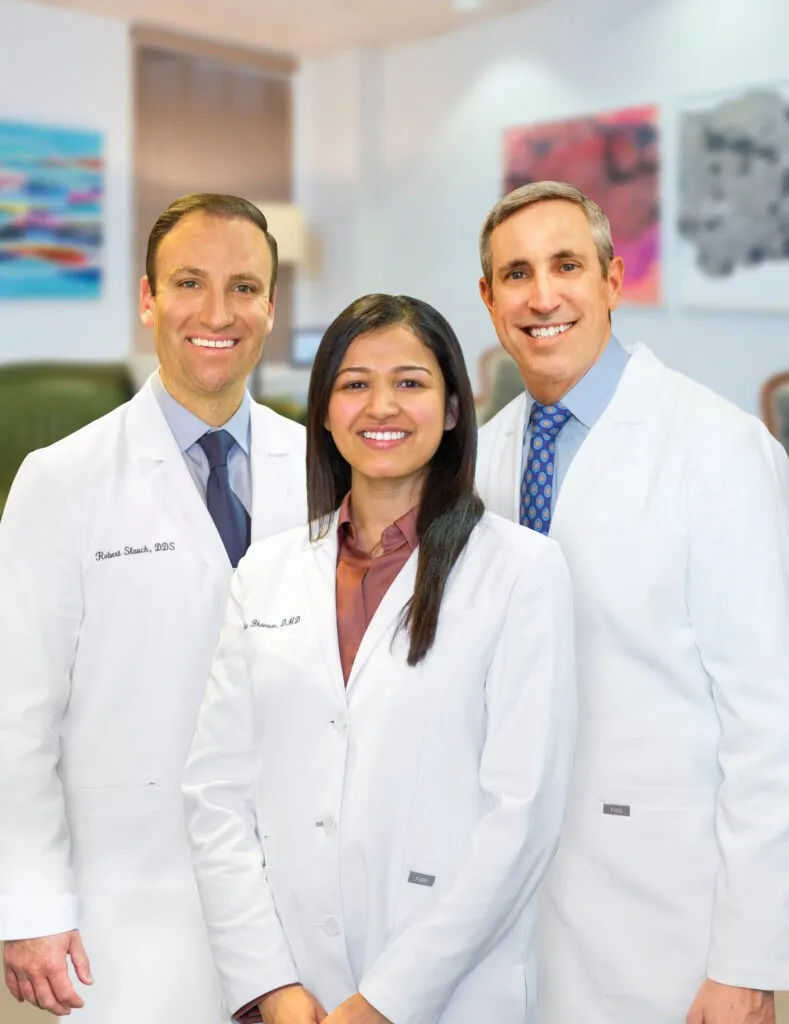
At Laudenbach Periodontics & Dental Implants, we understand how important it is to feel informed and supported when navigating a treatment plan that involves multiple steps. Led by our team of highly trained dental specialists, Dr. Jay Laudenbach and Dr. Ishita Bhavsar, our practice brings extensive expertise and advanced training to every patient. Dr. Laudenbach is a Board Certified Diplomate of the American Board of Periodontology and a graduate of the Penn Periodontics program, with over 20 years of trusted experience helping patients in the Philadelphia area restore their smiles with confidence.
What Is Ridge Augmentation?
The ridge refers to the bony arch of the jaw that once supported your natural teeth. When teeth are missing, this ridge loses both height and width through a process called resorption, where the body gradually reabsorbs the bone because it is no longer being used. Ridge augmentation is a bone grafting procedure designed to restore that lost volume and recreate a jaw structure that can properly support a dental implant.
Without sufficient ridge width and height, an implant cannot be placed in a stable, functional position. Ridge augmentation addresses this by building the jaw back up using carefully selected bone grafting material, creating the foundation that makes implant placement possible and long-lasting.
How the Procedure Works
Ridge augmentation is typically performed after a tooth has been lost or extracted, and enough time has passed for resorption to reduce the available bone. The procedure involves placing bone grafting material at the deficient site and, in many cases, covering it with a membrane to protect the area and guide new bone growth in the right direction.
This technique is closely related to guided bone and tissue regeneration, which uses a specialized barrier membrane to prevent soft tissue from filling the space before new bone has the opportunity to develop. Together, these approaches allow us to predictably rebuild areas of the jaw that would otherwise be unsuitable for implants. The timeline for healing varies depending on the extent of the augmentation, but most patients are ready for implant placement within several months of the procedure.
When Ridge Augmentation Is Needed
Not every patient who has experienced bone loss will require ridge augmentation, but it is commonly recommended in situations where resorption has significantly changed the shape or volume of the jaw. Patients who have been missing teeth for a long period of time are among the most frequent candidates, as prolonged absence of a tooth root accelerates bone loss in that area.
Ridge augmentation may also be recommended for patients whose bone grafting needs extend beyond what socket preservation alone can address. Socket preservation is performed immediately at the time of extraction to slow down bone loss, but when that step was not taken, or when significant resorption has already occurred, a more involved augmentation procedure becomes necessary. In some cases, ridge augmentation is also part of the preparation for patients pursuing full arch dental implants who need a more comprehensive rebuilding of the jaw before treatment can move forward.
What to Expect During Recovery
The recovery process following ridge augmentation is manageable for most patients, and our team provides detailed guidance every step of the way. Some swelling and tenderness in the treated area are normal in the days following the procedure, and we will walk you through our post-operative instructions to ensure your healing goes as smoothly as possible.
Follow-up appointments allow us to monitor how the graft is integrating and how new bone tissue is developing at the site. We take this monitoring seriously, because the quality of bone that forms during this healing phase is what determines the long-term stability of your implant. Once healing is complete and we confirm that sufficient bone volume has been achieved, we will move forward with the implant placement process.
Premium Materials for Lasting Results
The quality of the materials used in bone grafting directly affects how well the graft integrates and how predictable the outcome will be. At Laudenbach Periodontics & Dental Implants, we are committed to using only premium components throughout every stage of your care. We exclusively place implants manufactured by Straumann, the leading dental implant manufacturer in the world, and we use only genuine Straumann high-quality components to create your new teeth and ensure a long-lasting result.
That same commitment to quality extends to the grafting process itself. Whether we are using autograft, allograft, xenograft, or synthetic grafting material, we select the option that gives your bone the best possible environment for regeneration. The goal is always a result that holds up beautifully over the long term.
Take the First Step Toward Your Implant Treatment
If you have been told that bone loss may be standing between you and dental implants, ridge augmentation may be exactly what makes your treatment possible. Many patients who come to us feeling discouraged about their options leave with a clear, achievable plan for rebuilding their smile.
We invite you to request an appointment at our Philadelphia office to learn more about ridge augmentation and whether it is the right step for you. Our $219 consultation offer includes all necessary X-rays, full periodontal charting, and a full series of photos at no additional charge, so you can start your journey with a complete picture of your oral health.