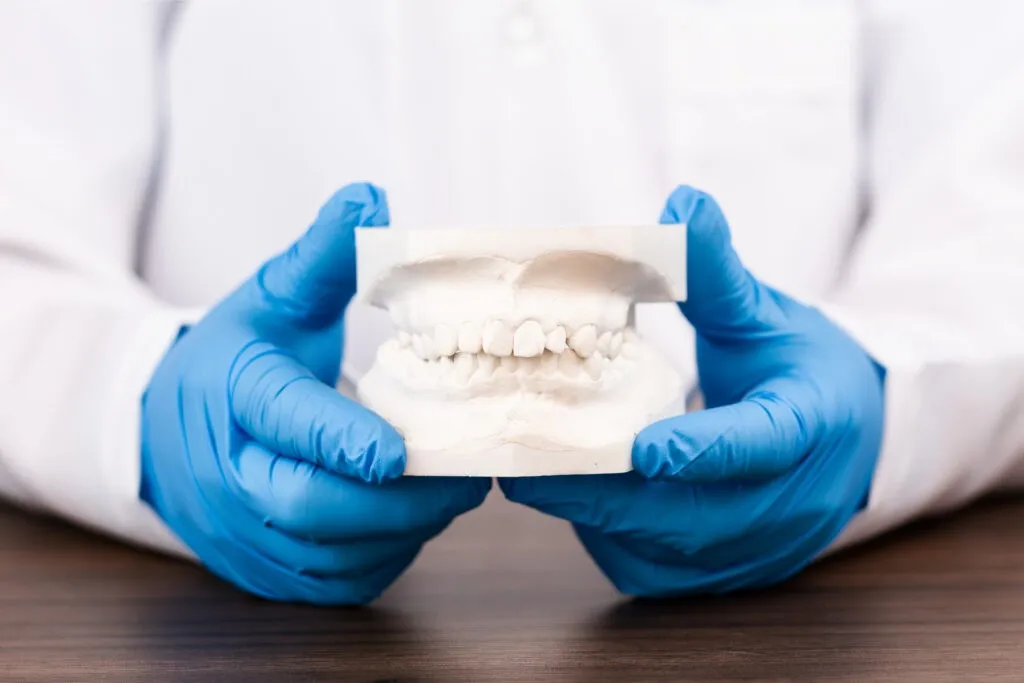
Poor sleep quality can stem from factors you might not expect, including the way your upper and lower teeth align. Your bite, formally known as dental occlusion, plays a role in sleep-related breathing that affects how well you rest each night and how alert you feel during the day. If you find yourself waking frequently or feeling unrested despite sleeping for hours, your bite alignment could be contributing to the problem.
At Laudenbach Periodontics & Dental Implants, we understand the connection between oral health and overall wellbeing. With nearly five decades of experience serving the Philadelphia area, our team evaluates how dental structures influence sleep quality and breathing patterns. Dr. Jay Laudenbach, Dr. Ishita Bhavsar, and Dr. Robert Slauch use advanced diagnostic technology to assess whether bite alignment issues are impacting your nightly rest.
The Connection Between Dental Occlusion and Sleep Disorders
Obstructive sleep apnea occurs when the upper airway repeatedly collapses during sleep, causing breathing interruptions that fragment rest. While factors like body weight and age contribute to sleep apnea risk, dental and jaw relationships also play a role in maintaining open airways during sleep. Research on patients with moderate to severe sleep disorders shows that certain bite characteristics appear more frequently among those experiencing breathing difficulties at night.
The position of your jaw affects the space available for your tongue and soft tissues in your throat. When your lower jaw sits too far back relative to your upper jaw, the airway space behind your tongue narrows. This reduced space makes it easier for soft tissues to collapse during sleep, blocking airflow and causing apnea episodes that jolt you awake throughout the night.
How Malocclusion Influences Breathing Patterns
Malocclusion refers to misalignment between upper and lower teeth when your jaw closes. Different types of malocclusion can affect airway dimensions and breathing efficiency during sleep. Class II malocclusion, where the upper teeth sit significantly forward of the lower teeth, often corresponds with a retracted lower jaw position that reduces posterior airway space.
Studies examining dental characteristics in sleep disorder patients reveal interesting patterns. According to research published in the Saudi Medical Journal, dental relationships like overbite, overjet, and crossbite distributions vary among patients with breathing disorders, though not all correlations reach statistical significance. The relationship between dental alignment and sleep quality remains complex, with multiple factors contributing to individual outcomes.
Your periodontal therapy needs may also intersect with sleep concerns, as tissue health and inflammation can influence airway function. We evaluate these interconnected factors when assessing your oral health comprehensively.
Treatment Approaches for Bite-Related Sleep Issues
Several treatment modalities address bite alignment problems that contribute to sleep-disordered breathing. Oral appliances designed to advance the mandible forward during sleep help maintain open airways by repositioning the jaw and tongue. These custom-fitted devices work by increasing the space behind your tongue, reducing the likelihood of airway collapse.
Mandibular advancement devices have proven effective for many patients with mild to moderate sleep apnea. The devices reposition your lower jaw forward by approximately 25% to 75% of maximum comfortable protrusion, according to dental sleep medicine standards. This forward positioning maintains airway patency throughout the night, reducing apnea episodes and improving sleep quality.
For more severe structural concerns, orthodontic treatment or surgical intervention may provide lasting solutions. Expanding the upper jaw can increase nasal airway dimensions, while advancing the lower jaw surgically creates permanent airway enlargement. Your treatment path depends on the severity of your bite discrepancy and sleep disorder symptoms.
Advanced Diagnostic Technology for Sleep Assessment
Accurate diagnosis requires thorough evaluation of your dental structures and sleep patterns. Polysomnography remains the gold standard for diagnosing obstructive sleep apnea, measuring breathing events, oxygen saturation, and sleep stages throughout the night. We work collaboratively with sleep specialists who provide these diagnostic studies.
Our practice uses cone beam 3D imaging to visualize your jaw position, airway dimensions, and dental relationships in three dimensions. This technology allows precise assessment of anatomical factors contributing to airway narrowing. Digital radiography provides additional detailed views of skeletal relationships affecting your bite and breathing.
For patients considering oral appliance therapy, we conduct comprehensive examinations evaluating your temporomandibular joint function, dental health, and periodontal status. Long-term oral appliance use can create changes in tooth position, so monitoring dental structures throughout treatment ensures optimal outcomes while protecting your dental health.
Trust Our Team With Your Sleep Health at Laudenbach Periodontics & Dental Implants
Understanding how your bite affects your sleep empowers you to seek appropriate treatment for better rest and daytime function. Our team combines specialized training in periodontics and prosthodontics with advanced diagnostic technology to evaluate sleep-related concerns comprehensively. Dr. Laudenbach holds diplomate status with the American Board of Periodontology, while Dr. Bhavsar is board eligible, providing the highest level of clinical training.
We collaborate with sleep physicians to ensure coordinated care addressing both dental and medical aspects of sleep disorders. Whether you need periodontal treatment to optimize tissue health or comprehensive evaluation of bite factors affecting sleep quality, our nearly 50 years of experience serving the Philadelphia area positions us to help you achieve better rest. Contact our team today to schedule a consultation about how your dental health influences your sleep patterns.