Your jawbone is alive, constantly rebuilding itself through a process that makes dental implants and bone restoration possible. The jawbone’s remarkable ability to regenerate sets it apart from many other tissues in your body, creating opportunities to restore oral health even after significant bone loss.
Bone is far from static. It exists in a continuous state of remodeling, breaking down old tissue and forming new structure. This dynamic process makes the jaw one of the most adaptable skeletal structures in the body, responding to stress, healing from injury, and adapting to changes throughout your life.
The Living Architecture of Bone
Bone tissue consists of a mineral matrix primarily composed of calcium and phosphate, organized in a crystalline structure called hydroxyapatite. This mineralized framework gives bone its strength, while collagen fibers provide flexibility. Within this matrix, three types of specialized cells orchestrate the constant remodeling process.
Osteoblasts build new bone tissue, secreting the collagen matrix that eventually mineralizes. Osteoclasts break down old or damaged bone, releasing minerals back into the bloodstream. Osteocytes, mature bone cells embedded within the matrix, act as sensors that detect mechanical stress and coordinate the remodeling response. Your jawbone differs from other skeletal bones in one crucial way: it relies heavily on mechanical stimulation from your teeth to maintain its density.
What Happens After Tooth Loss
The alveolar bone that surrounds and supports your teeth begins deteriorating rapidly after extraction or tooth loss. Within the first three months, you can lose up to 25% of bone volume in that area. This process continues over time, with both horizontal and vertical bone dimensions shrinking as the socket fills with soft tissue rather than regenerating bone.
The absence of tooth roots removes the mechanical signals that normally maintain bone density. Osteoclast activity increases while osteoblast formation decreases, creating an imbalance that leads to progressive bone loss. The surrounding gums may also recede as the underlying bone structure changes, altering facial contours and potentially affecting adjacent teeth.
How Bone Regeneration Works
Bone grafting takes advantage of the body’s natural healing mechanisms to restore lost jawbone. When graft material is placed in an area of bone deficiency, it provides a scaffold that guides new bone formation. The body recognizes this material as a template, and osteoblasts migrate into the graft, depositing new bone matrix.
Three key processes drive successful bone regeneration. Osteoconduction occurs when bone-forming cells grow along the graft material’s surface, using it as a framework. Osteoinduction happens when the graft material stimulates stem cells to differentiate into osteoblasts. Osteogenesis involves transplanting living bone cells that directly form new bone tissue. Different graft materials support these processes in various ways, from autografts using your own bone to synthetic materials that replicate natural bone structure.
Guided Bone Regeneration Techniques
Advanced regeneration often requires physical barriers to ensure bone grows where needed. Specialized membranes placed over graft sites prevent soft tissue from migrating into the healing area, giving slower-growing bone cells time to populate the space. These membranes may be resorbable, dissolving naturally as healing progresses, or non-resorbable, requiring removal after bone formation is complete.
Growth factors can enhance regeneration rates significantly. Platelet-rich plasma contains concentrated growth factors from your own blood that accelerate healing. Bone morphogenetic proteins stimulate stem cells to become bone-forming cells, working particularly well in areas with compromised healing potential.
The Timeline of Bone Healing
Bone regeneration follows a predictable sequence. The first two weeks after grafting involve clot formation and initial inflammation as the body’s healing response activates. Weeks three through eight see soft callus formation, with cartilage and fibrous tissue bridging the defect.
Months two through four bring hard callus formation as mineralization converts soft tissue into immature bone. Full maturation takes four to six months or longer, depending on the graft size and location. Sinus augmentation procedures may require six to nine months before implant placement, while smaller grafts may be ready in four months.
Supporting Your Bone Health
Several factors influence bone regeneration success. Adequate calcium and vitamin D intake provide essential building blocks, while good blood sugar control matters significantly. Avoiding tobacco dramatically improves outcomes, since smoking restricts blood flow and compromises cellular function.
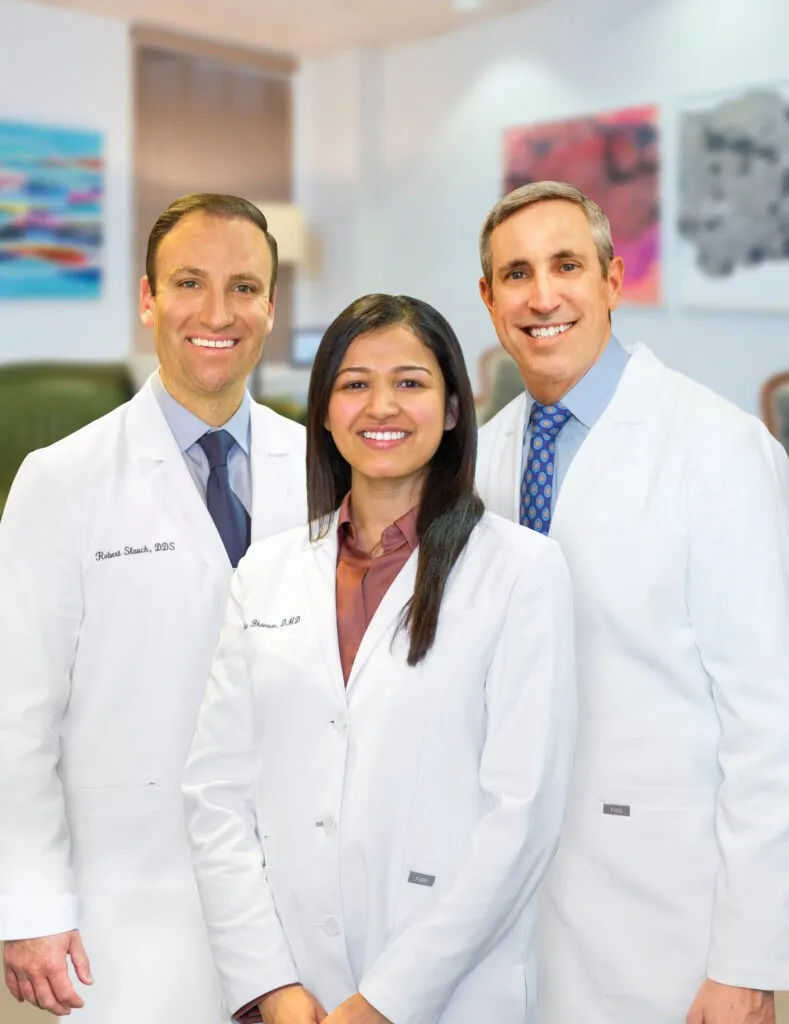
Maintaining oral hygiene protects regenerating bone from infection, and regular prophylaxis cleanings remove bacteria that could compromise healing.The science of bone regeneration has transformed what’s possible in oral rehabilitation. Dr. Jay Laudenbach is a board certified diplomate of the American Board of Periodontology. Dr. Ishita Bhavsar, and Dr. Robert Slauch have extensive experience in bone grafting procedures that restore jawbone structure and create stable foundations for dental implants. If you’re considering treatment that involves bone regeneration, contact us to discuss how these biological principles can restore your oral health.